The Manuscript as Wound
In the early eighth century, an Anglo-Saxon abbot named Ceolfrith died on the road to Rome. He was carrying a Bible
His monastery at Monkwearmouth-Jarrow had slaughtered two thousand cattle to produce three copies of it. The surviving volume is seventy-five pounds of compressed animal — skin scraped to translucency, inked, bound, and sent as a gift to a pope who never received it. Ceolfrith collapsed somewhere in Burgundy. The book continued without him.
This is the world Aeswith inhabits. Not a world of serene scholarship, but one of industrial devotion — where learning was measured in herds of cattle, and manuscripts were monuments built from the dead.
The making of sacred books in 8th-century Northumbria was inseparable from violence. King Ine of Wessex specified in his law codes that boys begin military training at seven years old. The fyrd system — the obligation of all able-bodied males to fight — meant that the men who eventually retreated into monasteries to copy scripture had already been trained to kill. The scriptorium wasn't a refuge from that world. It was what you did with the guilt it produced.
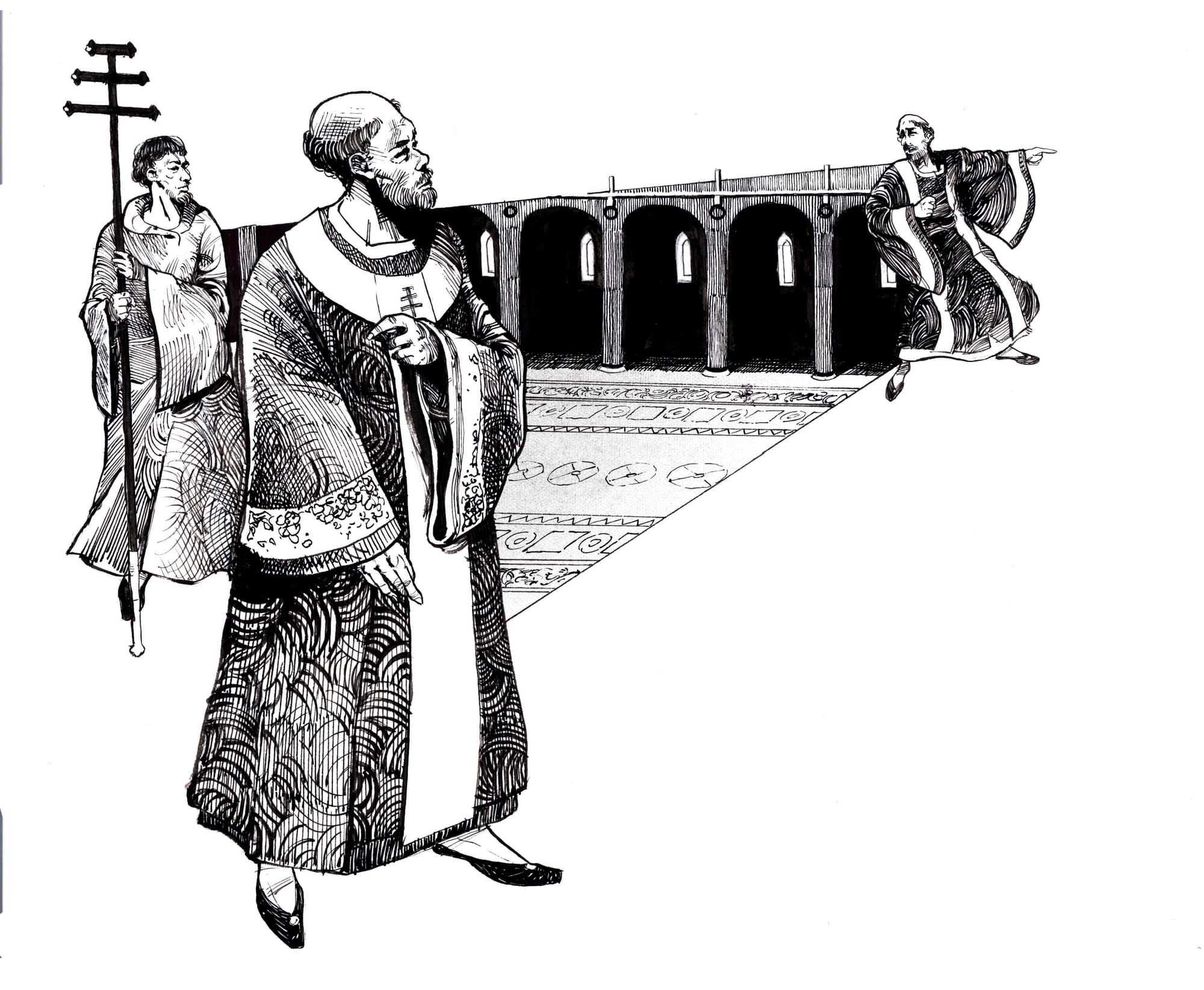
Aeswith's curse is my invention. But the conditions that make it believable are not. A Celtic-Christian culture that still half-believed in sacred wells, cursed objects, and spirits inhabiting the margins of the natural world — these weren't superstitions the church had fully overwritten. They ran alongside Latin doctrine the way an underground river runs beneath paved stone. You feel the current even when you can't see it. Eadfrith of Lindisfarne spent ten years alone on his gospels — a labour of such obsessive singularity that it reads less like scholarship and more like penance. He died before it was finished.
The 8th-century manuscripts we venerate today — Lindisfarne, Ceolfrith's Bibles, the Book of Kells — emerged from a culture that fused Roman Christian orthodoxy with Celtic intricacy and the residual memory of Germanic paganism. That fusion wasn't harmonious. It was the creative product of friction, of traditions that didn't fit together cleanly and therefore produced something neither could have made alone. The manuscripts are beautiful precisely because they are unresolved.
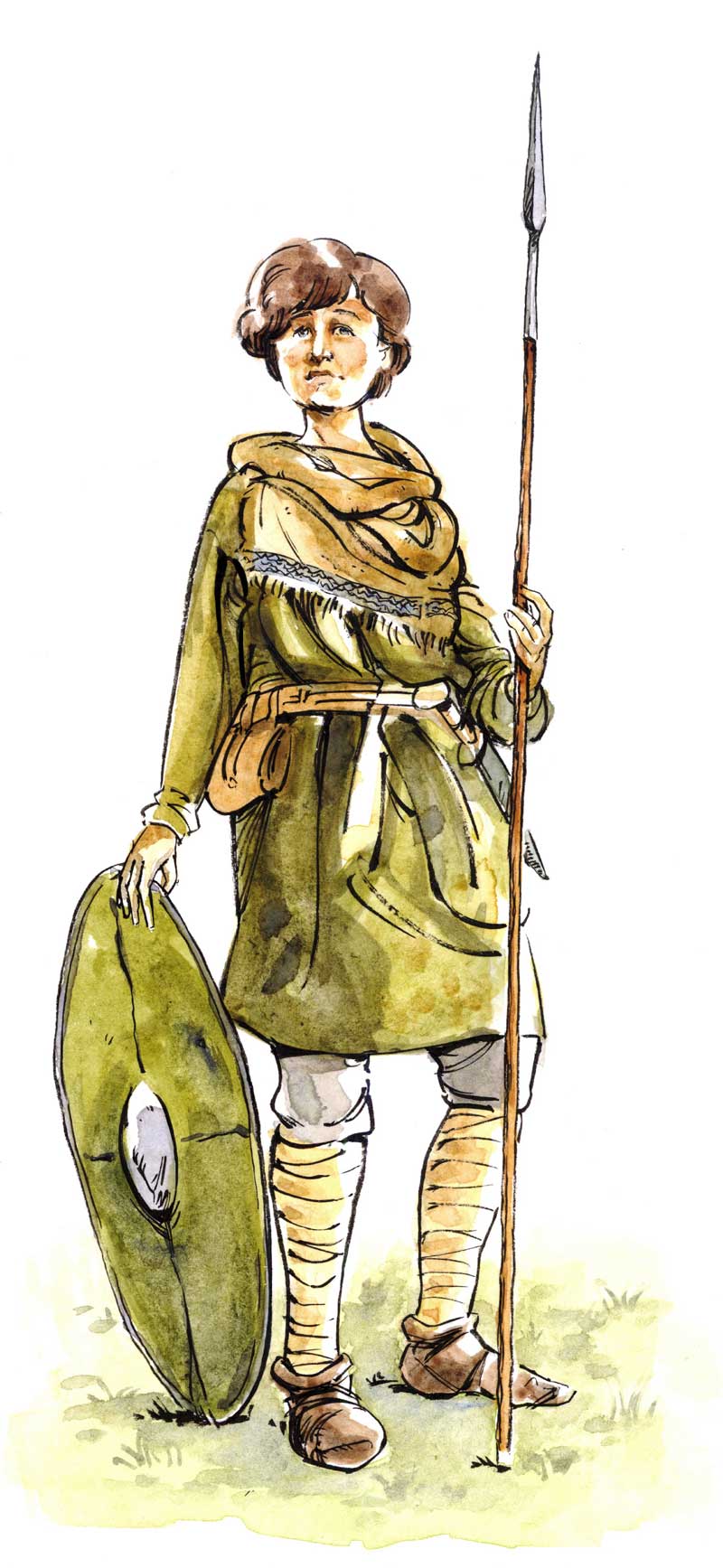
Romano-British monk Gildas wrote in the 6th century: "Britain has kings, but they are tyrants; she has judges, but unrighteous ones." The monasteries weren't trying to fix that. They were trying to outlast it. Retirement from the world, not revolution — the belief that God had built suffering into creation as a form of instruction, and that the proper response was to endure it in prayer and labour.
What Gildas couldn't say, and what Aeswith's story tries to articulate, is what happens to the man who retreats from a world of state violence into a system of spiritual labour — and finds that the weight followed him. The manuscript he produces becomes the record of everything he couldn't leave behind. Vellum is animal skin. Ink is made from iron and gall. The act of writing, in this context, is not transcendence. It's a different kind of wounding.
The curse in Aeswith's story lives in the space between what the church permitted and what Northumbrian folk culture still half-believed. That space was real. It produced real manuscripts. Some of them survive.

